Honored Again in "The Best Lawyers In America"
Powers & Santola LLP

 
Home
Firm Profile
Attorney Profiles
Practice Areas
Do I have a Case
Verdicts and Settlements
Client Resource Center
FAQs
Case Evaluation Form
Attorney Resource Center
Patient's Bill of Rights
Client's Bill of Rights
Firm News
Contact Us


Print This Page


For more information call us at. 1-866-689-9692
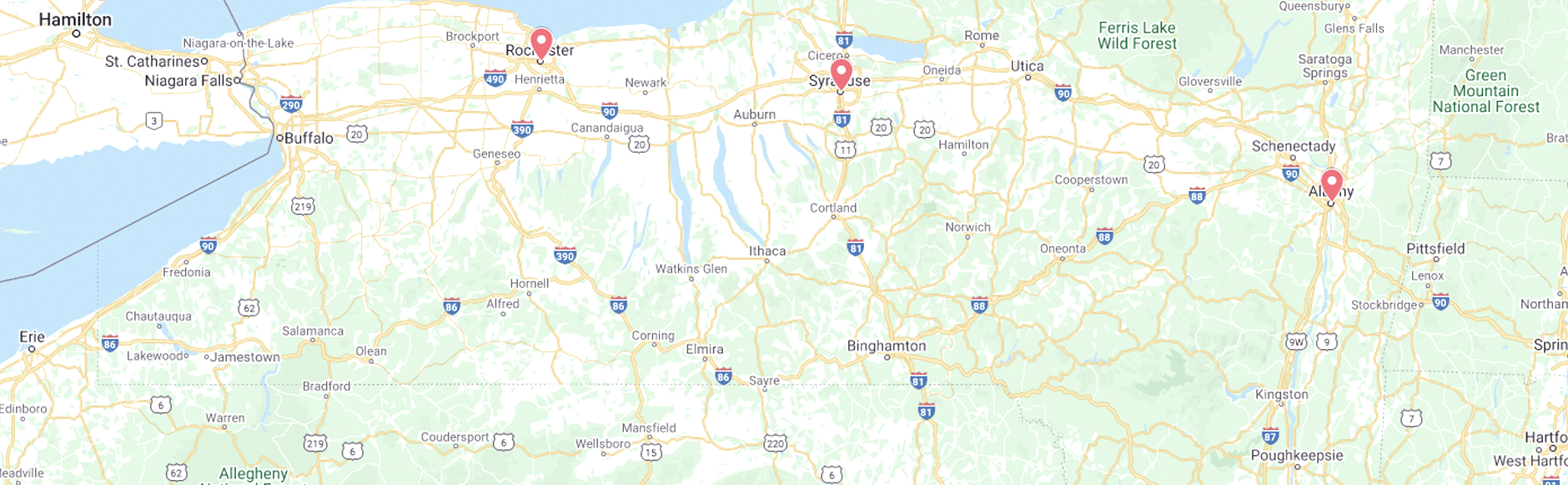
Office Locations

Powers & Santola, LLP
39 North Pearl Street
Albany, NY 12207-2785
Telephone: 518-478-6616
Toll-Free: 1-866-689-9692
Fax: 518-426-4012

Powers & Santola, LLP
407 S. Warren Street
Syracuse, NY 13202
Telephone: 518-478-6616
Toll-Free: 1-866-689-9692
Fax: 518-426-4012


Client Resource Center

Client Resource Center
"THREE SISTERS" Description: One of three allegorical representations of civil law from 14th century Italy. A book of law, the globe or affairs of the world balanced against the hook of commerce. The sword of strength and crown of just rewards.

Original painting by Trevor Goring in the private collection of Powers & Santola, LLP.

AUTOMOBILE ACCIDENT RECONSTRUCTION:
THE “BLACK BOX”

John K. Powers

Powers & Santola, LLP
39 North Pearl Street
Albany, New York 12207
518-465-5995
jpowers@powers-santola.com


Introduction

Most people are aware that large commercial aircraft (and some smaller commercial, corporate, and private aircraft) are required by the FAA to be equipped with two "black boxes" that record information about a flight. Both recorders are installed to help reconstruct the events leading to an aircraft accident. One of these, the Cockpit Voice Recorder (CVR), records radio transmissions and sounds in the cockpit, such as the pilot's voices and engine noises. The other, the Flight Data Recorder (FDR), monitors parameters such as altitude, airspeed and heading. The older analog units use one-quarter inch magnetic tape as a storage medium and the newer ones use digital technology and memory chips. Both recorders are installed in the most crash survivable part of the aircraft, usually the tail section. Each recorder is equipped with an Underwater Locator Beacon (ULB) to assist in locating the unit in the event of an over water accident. The device called a "pinger” is activated when the recorder is immersed in water. It transmits an acoustical signal on 37.5 KHz that can be detected with a special receiver. The beacon can transmit from depths down to 14,000 feet.

Following an accident, both recorders are immediately removed from the accident site and transported to NTSB headquarters in Washington D.C. for processing. Using sophisticated computer and audio equipment, the information stored on the recorders is extracted and translated into an understandable format. The Investigator-in-Charge uses this information as one of many tools to help the Safety Board determine the probable cause of the accident.

What most people are unaware of is that, during the past decade, more than six million passenger motor vehicles sold in this country have been equipped with “black boxes” capable of providing similar types of information regarding the circumstance surrounding automobile crashes.

Background

The Event Data Recorder (EDR) in an automobile is based upon the sensors and microprocessor computer system that are used to activate the airbag in the vehicle during a crash.

General Motors introduced the first regular production driver/passenger air bag systems as an option in selected 1974 production vehicles. It incorporated electromechanical g-level sensors, a diagnostic circuit that continually monitored the readiness of the air bag control circuits and an instrument panel readiness and warning lamp that illuminated if a malfunction was detected. The data-recording feature utilized fuses to indicate when a deployment command was given and stored the approximate time the vehicle was operated with the warn­ing lamp illuminated.

During the next two decades, as vehicles became increasingly sophisticated, more electronic systems and sensors were added to the automobiles. These included engine control modules that gathered information about throttle position, engine RPM and airflow. Acceleration sensors were added to activate airbags, wheel speed sensors were added for antilock braking systems (ABS) and traction control systems and vehicle yaw rate sensors were required for stability control systems.

Beginning in 1990, a more complex Diagnostic and Energy Reserve Module (DERM) was introduced by General Motors with the added capability to record closure times for both the arming and discriminating sensors as well as any fault codes present at the time of deployment.

For the 1994 model year, the multiple electromechanical switches previously used for crash sensing were replaced by GM with the combination of a single solid state analog accelerometer and a computer algorithm integrated in a Sensing & Diagnostic Module (SDM)."

The SDM also computed and stored the change in longitudinal vehi­cle velocity (Delta-V) during the impact to provide an estimate of crash sever­ity. This feature allowed GM engineers to obtain restraint system perfor­mance data when a vehicle was involved in a deployment event or expe­rienced an impact related change in longitudinal velocity, but did not com­mand deployment (i.e. near-deployment event). The SDM also added the capability to record status of the driver’s side switch belt (buckled or unbuckled) for deployment and near deployment events. This is what we now refer to as the “Black Box” (although it is actually metallic silver in color).

The “Black Box”
How the System Works
A Technical Description of the Event Data Recording Process
Data Accuracy, Limitations, and Validation
Retrieving Event Data from GM Vehicles
The following is a List of Vehicles Equipped with an Event Data Recorder (EDR)
Airbag Module Data
Data Summary Table
Post-Crash Graph: SDM Recorded Velocity Change
Data Summary Table
Post-Crash Graph: SDM Recorded Velocity Change
Pre-Crash Graph
Data Summary Table
Post-Crash Graph: SDM Adjusted Algorithm Velocity Change[20]
The Ford Motor Company System
The Following is a List of Firms and Individuals that Provide Event Data Recorder (EDR) Data Recovery Services:
Is the data from a “Black Box” admissible?

Bibliography

2001
2000
1999
1998
1997
1996
1995
1994
1993
1992
1991
1990
1989
1988
1987
1986
1985
1984
1982
1981
1979
1978
1977
1976
1975
1974
1973
1972
1971
1970
1969
1968
1967
1966
1965
1964
1963
1962
1960
1956
1953


Email Us