Honored Again in "The Best Lawyers In America"
Powers & Santola LLP

 
Home
Firm Profile
Attorney Profiles
Practice Areas
Do I have a Case
Verdicts and Settlements
Client Resource Center
FAQs
Case Evaluation Form
Attorney Resource Center
Patient's Bill of Rights
Client's Bill of Rights
Firm News
Contact Us


Print This Page


For more information call us at. 1-866-689-9692
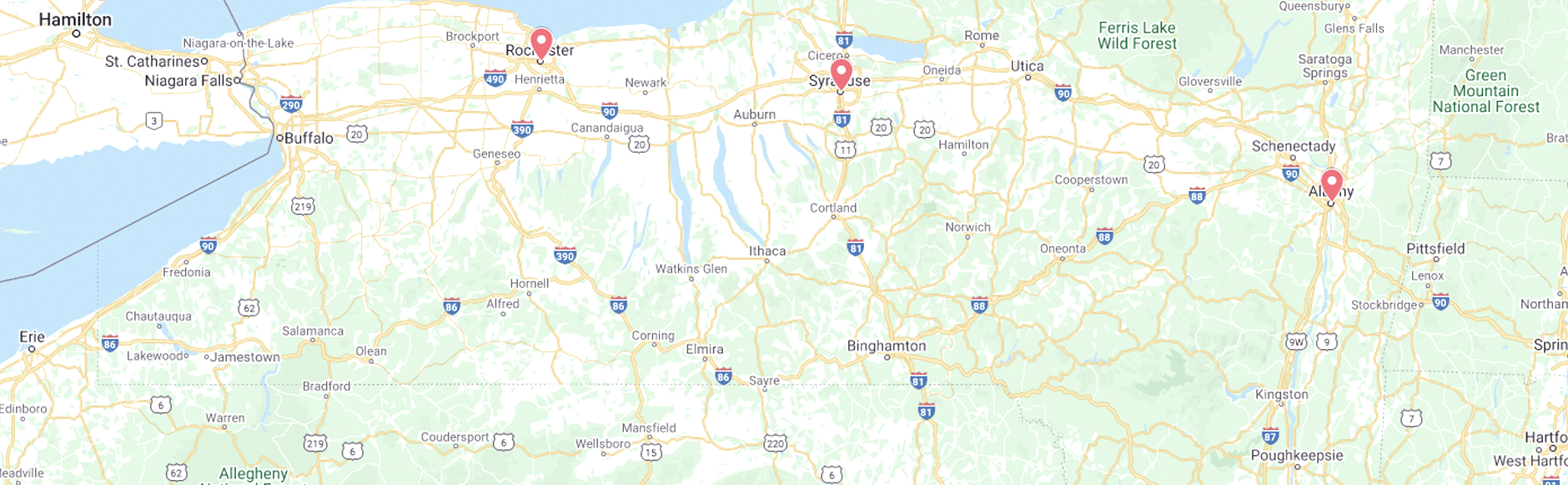
Office Locations

Powers & Santola, LLP
39 North Pearl Street
Albany, NY 12207-2785
Telephone: 518-478-6616
Toll-Free: 1-866-689-9692
Fax: 518-426-4012

Powers & Santola, LLP
407 S. Warren Street
Syracuse, NY 13202
Telephone: 518-478-6616
Toll-Free: 1-866-689-9692
Fax: 518-426-4012


Practice Areas

Practice Areas
"NEMESIS" Description: She whom none can escape Daughter of the night, ancient Greek Goddess of due proportion, Nemesis evenhandedly restores the equilibrium of justice.

Original painting by Trevor Goring in the private collection of Powers & Santola, LLP.

New York Labor Law

REPAIR WORK vs. ROUTINE MAINTENANCE OR MANUFACTURING: Covey v. Iriquois Gas, 89 NY2d 952

Routine maintenance and manufacturing work are not activities covered by the statute. In Jock v. Fien, 80 N.Y.2d 965 (1992), the Court of Appeals held that a plaintiff who fell off of the elevated surface of a mold, while fabricating a septic tank, was performing manufacturing work and was not engaged in any of the enumerated activities listed under §240. However, if a worker is performing maintenance or possibly even manufacturing work, which is also an integral and necessary part of one of the other covered activities, the worker may qualify for the protection afforded by the statute. In Covey v. Iriquois Gas, 89 NY2d 952, the Court held that a worker performing maintenance type work on a backhoe was covered under the statute because it was an integral part of the construction project he was employed on. Repair work, however, is an activity listed as a protected activity under the statute. Distinguishing between repair and maintenance can, therefore, have significant consequences.

PROXIMATE CAUSE

The Court of Appeals held that "we have interpreted the statute as imposing absolute liability for a breach which has proximately caused an injury." Rocovich v. Consolidated Edison, 78 N.Y.2d 509, 513 (1991). To satisfy the burden of proving a prima facie case, plaintiff must show that defendant's negligence was a substantial cause of the events, which produced the injury. Derdarian v. Felix Contr. Co., 51 N.Y.2d 308, 315 (1980).

The issue of proximate cause has become the main defense argument raised to defeat the plaintiff's 240, as well as the other Labor Law claims. In Zimmer v. Chemung County Performing Arts, 65 N.Y.2d 513, 524 (1985), the Court held that where there is no view of the evidence to support a finding that the absence of safety devices was not a proximate cause of a plaintiff's injuries, a directed verdict in favor of the plaintiff is warranted. If proximate cause is established, the responsible parties have failed, as a matter of law, to "give proper protection."

However, if the defendant can establish that the statute was not violated and that the sole proximate cause of the accident was the worker's own fault, a valid defense to the claim sufficient to defeat summary judgment may exist. Weininger v. Hagedorn, 91 N.Y.2d 958. Weininger was injured when he fell off the stepladder he was working on. Although the facts are not fully discussed in the decision, the record on appeal reveals that plaintiff was standing on the crossbar support between the front and the back of the ladder when it tipped over. The Court of Appeals denied Mr. Weininger's motion for summary judgment finding that an issue of fact existed as to whether his own action was the sole cause of the accident.

In Secord v. Willow Ridge Stables, Inc., 261 A.D.2d 965, 690 N.Y.S.2d 375 (Monroe County Supreme 1/13/99), Judge Siracuse analyzed the principals of proximate cause as it applies to a §240 claim and the limitations of Weininger. The facts of this case were not in dispute. Plaintiff, a carpenter, was installing prefabricated roof trusses on defendant's building. The roof trusses were set into position and stabilized with a 2 x 4, which was nailed into place. Plaintiff was resting on top of one truss, waiting for another to arrive. While so positioned, the trusses suddenly collapsed like dominos causing him to fall 10 to 15 feet and sustain an injury.

Defendant argued that there was an issue of fact as to the cause of the accident sufficient to require a trial citing, Weininger v. Hagedorn, 91 N.Y.2d 958. Judge Siracuse noted that the Court of Appeals and the Appellate Division decision in Weininger fails to point out significant facts of the case: that the plaintiff was standing on the cross-bar of the ladder when the ladder tipped over. Under this unusual set of facts, it makes sense that the Court of Appeals sent the matter to trial for resolution on the issue of causation: did the ladder fail because it was inadequate or defective or improperly placed, or was it solely the misuse of the ladder by the plaintiff? Judge Siracuse pointed out that the plaintiff does not have to exclude all other causes of the accident but only show that the violation was "a cause" of the accident. Unlike the Weininger case, plaintiff Secord had not been provided with any safety devices that would prevent the collapsing of the trusses. Key to this analysis by Judge Siracuse, was his recognition of the principle that there is always something that precipitates the events resulting in an accident. Plaintiff may have tripped, reached for a tool, attempted to help a co-worker, tripped over debris into a hole or, as in this case, a co-worker may have removed the 2x4's supporting the trusses. The statute requires that when something goes awry, the workmen be provided with an appropriate safety device to prevent a fall type injury. What was Mr. Secord given when the 2 x 4 support was removed? Defendants produced no proof to contradict plaintiff's assertion that he was not given anything. Therefore, there was no issue concerning proximate cause under these facts.

As pointed out in the above case, there will always be some preceding event that will precipitate the need for safety devices on the job site. If the defendant fails to provide a safety device to prevent the injury from happening, no matter what the precipitating event is, it can only be a concurrent cause of the worker's accident. Defendant's failure to provide sufficient safety devices will always be another causative factor. Often, the defense argues that the worker's injuries were caused by a superseding event, such as the operator of the vehicle that runs into a scaffold, causing it to collapse. This argument is an attempt to focus the court's attention on what set this chain of events into motion and away from the defendant's failure to provide an appropriate scaffold that was properly positioned or protected so as to prevent vehicles from coming into contact with it. Another illustration occurs when a plaintiff falls from a bridge as a result of a sudden unexpected gust of wind and the defense contends that this accident was caused by an act of God or at least by an unforeseen event beyond their control. Here the defendant seeks to exclude from consideration it's failure to provide safety harnesses or other devices as mandated by the statute, by blaming the plaintiff's injury on an unforeseen event. Upon closer analyses, the precipitating event may have been a causative factor in the plaintiff's injuries but section 240 (1) was enacted to provide the plaintiff with fall protection when the need for it arises, no matter what the cause is. See: Joyce v. Rumsey, 17 N.Y.2d 118; Robinson v. NAB Construction Corp., 210 A.D.2D 2d 86; Van Alstyne v New York Thruway Authority 244 Ad2d 978; Iannalli v. Olympia 190 A.D.2D 2d 775. The logic in Joyce, supra, is flawless:

"No one is ever injured by an unguarded opening. Something must project him into the hole, but that something cannot be more than a concurrent cause of the injury. The statute puts absolute and unconditional liability on the contractor and in favor of the workman who falls through the floor opening which the statute insists must be covered. To hold otherwise would be to deprive the worker of the protection afforded him by the Labor Law. To say that a jury in such a case could bring in a no cause verdict would be to say that the jury can nullify the statute." Joyce v. Rumsey, at 123.

In Rupert Blake v. Neighborhood Housing Services of NYC, Inc. 1 N.Y.3d 280 the plaintiff, Blake, was hired by a homeowner to perform certain construction work at her premises. He was injured when the extension ladder he was upon suddenly retracted and in the process the plaintiff sustained an ankle injury. The extension ladder was owned by Blake and frequently used by him. He set the ladder up and acknowledged that it was steady, had rubber shoes and was in proper working condition. At his deposition he testified the ladder was securely placed and not broken or defective, there was no need to have anyone hold the ladder while he was using it or ascending it. Summary judgment motions were made by all parties, subsequently denied and the case proceeded to trial. At the trial, Blake conceded that he could not identify any defect in his ladder. It was stable and there was no reason to have it steadied during use. He also indicated he was not sure if he had locked the extension clips in place before ascending the rungs. Upon written interrogatories, the jury found that the ladder used by plaintiff was so constructed and operated so as to give proper protection to plaintiff. The court termed this response an inescapable conclusion that the accident happened not because the ladder malfunctioned or was defective or improperly placed, but solely because of plaintiff's own negligence in the way he used it. The plaintiff argued that §240(1) nonetheless required that the jury's verdict should be set aside since the sudden retracting of the ladder, presumably due to the improperly placed extension clips still gave rise to liability since the device, as it was constituted at the time of the fall, did not provide proper protection and it must result in liability even if plaintiff himself owned the ladder and improperly placed it in position before using it. In support of this argument plaintiff relied on Haimes v. New York Telephone Co., 46 N.Y.2d 132. The defense argued that the imposition of liability under the facts of this case, where there was no finding that the ladder was improper, defective, slipped, or was inadequately placed, would result in making owners, agents and their contractors' insurers under the statute.

Retracing the history of §240(1) and the courts decision in Koenig v. Patrick Constr. Corp. 298 NY 313 (1948) which concluded contributory negligence was not a valid defense, did not warrant the imposition of an insurers form of liability. Despite the court having consistently held that a violation of the statute, which violation was a substantial factor in giving rise to the accident results in the imposition of strict liability, the term "strict (or absolute) liability" as used in the context of Labor Law §240 is different than the term as used in other areas of the law (e.g.: blasting activities, the keeping of wild animals, the discharging of waste under the navigation law, strict liability in connection with product liability or liability imposed under the Uniform Commercial Code). Citing from previous decisions, the court noted that they had consistently held throughout the years that not every fall at a construction site results in liability under §240(1). Only those caused by a violation of §240(1) will result in liability. Under the facts of this case the plaintiff produced no evidence to show a violation of the statute, and even after a jury trial no violation was found to have been presented. Without a violation there cannot be liability under §240. Therefore, under the specific facts of this case it can only be concluded that the sole cause of the accident was the plaintiff's misuse of the ladder. "Put differently, an accident alone does not establish a Labor Law §240(1) violation or causation." As stated in Weininger v. Hagedorn 91 NY2d 958 (1998), where a reasonable jury could have concluded that plaintiff's actions were the sole proximate cause of his injury there is no liability under §240(1). Stated in the reverse "it is conceptually impossible for a statutory violation, which serves as a proximate cause of a plaintiff's injury, to occupy the same ground as a plaintiff's sole proximate cause of the injury. Thus, if a statutory violation is a proximate cause of an injury, the plaintiff cannot be solely to blame for it. Conversely, if the plaintiff is solely to blame for the injury, it necessarily means that there has been no statutory violation." Blake

The court explicitly reaffirmed its previous holdings that under certain circumstances a violation of §240(1) can be found, as a matter of law, where the safety device collapses or malfunctions, is defective, or is improperly placed. (See Beesimer v. Albany Ave./Route 9 Realty 216 AD2d 853 (3rd Dept. 1995).

BUILDING OR STRUCTURE

By its terms, §240 (1) applies to work being performed on any building or structure. A building or structure is "any production or piece of work artificially built up or composed of parts joined together in some definite manner." Caddy v. Interborough Rapid Transit Co., 195 N.Y. 415, 420 (1909); Lewis-Moors v. Contel of N.Y., 78 N.Y.2d 942 (1991). Telephone (utility) pole is a structure. Tauriello v. NY Telephone, 199 A.D.2d 377 (2d Dept. 1993). Telephone line suspended between poles may be a structure or logical extension of a structure. Garrant v. NY Telephone, 179 A.D.2d 960 (3d Dept. 1992). A railroad car is a structure. Gordon v. Eastern Railway Supply, 82 N.Y.2d 555, 563 (1993). Although a tree is not a structure, tree removal operations in conjunction with a building's renovation is covered under §240 making plaintiff's claim for injuries sustained while sawing tree branch subject to liability. Lombardi v. Stout, 80 N.Y.2d 290, 296 (1992). A burial vault was held to be a structure in Ciancio v. Woodlawn Cemetary, 249 AD2d 86 ( 1st Dept. 4/98 ).

Although a highway may be a structure for purposes of Labor Law §241(6), it is not a structure for purposes of Labor Law §240. Dillon v. State of New York, 201 A.D.2d 793 (3d Dept. 1994). In Dillon, plaintiff was injured when thermoplastic splashed in his face as he was preparing to paint edge lines on a newly resurfaced State highway. The Court said that this was not covered, as a highway at a grade is not a "building" or "structure" within the purview of Labor Law §240. Although the Court of Appeals in Mosher v. State of New York, 80 N.Y.2d 286, held that highway repaving would fall within the purview of Labor Law §241(6), the Third Department stated that was merely due to the unique history of Labor Law §241(6), and highway construction was not covered under §240.

THE CLASS OF PEOPLE COVERED UNDER §240

In Mordrofsky v. C.V. Development Corp.,76 NY2d 573 the court held that the Labor Law applies only to those who are employed, which means by definition, those people who are "permitted or suffered to work." Thus, the Labor Law does not apply to volunteers, contract vendees, or others who are not workers. While the Court of Appeals has not yet definitively ruled that the worker must be employed as "a construction worker" before these statutes will apply, there are several Appellate Division decisions which have inserted this requirement into the statute.

Next Page >>


Email Us